WTO DG urges Africa to remove administrative obstacles to attracts investors
What the source reports
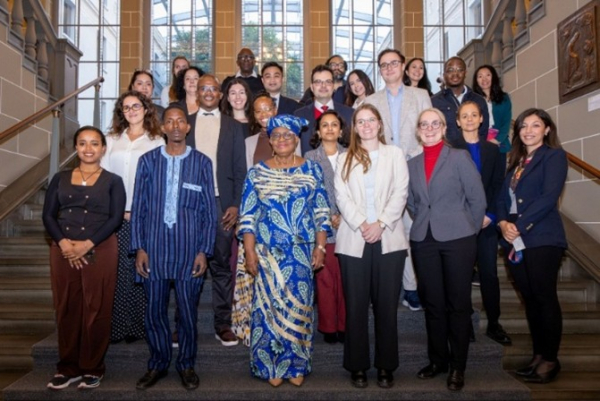
The Director General of the World Trade Organization (WTO), Dr. Ngozi Okonjo-Iweala, has called on Africa to remove administrative obstacles, simplify licensing and land access, and provide reliable infrastructure to attract investors. She said investors should not have to visit ten offices for permits, noting that economic processing or special economic zones, including models in Benin, can offer electricity, water, permits and ready-to-use factories for rent. Dr. Okonjo-Iweala made the remarks on Tuesday, October 27, 2026, during a press briefing at the WTO headquarters in Geneva, on the sidelines of a seminar for journalists from developing and least-developed countries, including The Gambia. The seminar, which runs from October 27 to 30, 2026, is being held during the 2026 Aid for Trade Global Review Week.
It is organised and funded by the WTO Secretariat in collaboration with the Konrad-Adenauer-Stiftung (KAS), and brings together selected journalists from Africa, Asia, Latin America, the Caribbean and Eastern Europe to strengthen understanding of global trade, multilateralism and trade-related development issues. Speaking at the briefing, the WTO chief said Africa must trade more with itself. Intra-African trade stands at around 20%, compared with about 60% within the European Union, she said. Trade costs in Africa remain too high, partly due to bureaucracy and inadequate infrastructure, but she noted that the continent can lower them and some countries are already showing progress. She explained that Aid for Trade was founded on the belief that trade must become more inclusive, as developing and poorer countries often lack the resources, knowledge and means to access markets and integrate into the global trading system. Technical assistance and training, she…
TDBN presents the written preview supplied through the publisher's feed. Complete reporting, continuing updates, context, and corrections remain with the original report.
Read the complete report ↗